Table of Contents
Lost in Transliteration—Fate/Stay Night, Hunter x Hunter, and Final Fantasy VII
Lost in Transliteration?
Hold up. Don’t you mean “Lost in Translation”? You dare post my ol’ tired localization content with a typo?
Nah. I think we’ve all read enough about what gets lost in translation. Most, I think, read enough of that type of localization sloptent for a couple of lifetimes. So let’s try something different. Let’s talk about what gets lost in transliteration.
Transliteration is the act of transferring the pronunciation of the original word in a different script without actually conveying its meaning, allowing readers or speakers of that script to approximate the sounds and pronunciation of the original word.
As opposed to the act of translation, transliteration is often reserved for foreign names and concepts deemed “untranslatable”.
When localizing entertainment media, juggling transliteration guidelines, audience expectations, and legibility could very easily become a nightmare. Often more visibly with translation, but also just as much with transliteration.
So:
- What happens when the creator tries their hand at transliterating names themselves?
- What happens when the creator does their own transliterations while letting their translators do their own thing?
- And what happens when the creator isn’t there to push back on a subpar transliteration?
In this article, we’ll explore three cases of transliteration—each leading to a unique outcome.
Maybe we’ll learn something new, or not. But it’ll be fun!
Case #1 - Fate/Stay Night by TYPE-MOON
The Context
Fate/Stay Night is Type-Moon’s hit urban fantasy Visual Novel, which spawned an entire connected universe of video games, light novels, Animes, and movie series.
The story follows seven mages participating in the “Holy Grail War” ritual, a battle royale to attain the wish granting Holy Grail. Each Mage (a.k.a. “Master”) summons a Servant—a heroic spirit from human history and myth—to do their bidding.
The true name of the protagonist’s servant and one of the story’s heroines, a gender-bent King Arthur Saber, is written in Japanese katakana as アルトリア, or “A-ru-to-ri-a”.
Artoria vs. Altria
For years, the English-speaking fandom translated Saber’s name as “Artoria” (and occasionally “Arturia”). This made perfect etymological sense—the Roman root for the name “Arthur” is “Artorius”, making “Artoria” its natural feminine form.
Then came the official English localization of the hit mobile game Fate/Grand Order, and with it, a strict corporate mandate from Type-Moon’s Japanese headquarters: The official English spelling was not to be Artoria, but Altria.
As shocking as this was to most of the fandom, a subset saw it come from a mile away.
But to get why, we have to go back down memory lane for a little bit.
TYPE-MOON’s Fan-Translation History
It was kinda miserable being a Visual Novel fan in the early 2000s. Pure Visual Novels with little to no gameplay elements didn’t pick up enough steam worldwide to justify localizing them into English until the early 2010s.
If Ace Attorney, Danganronpa, and Zero Escape weren’t your thing, you had to resort to fan-translations to read even the most mainstream pure Visual Novels—even the ones that had multiple anime and manga adaptations like Fate—simply because very few companies had the means to risk licensing a book for the famously-fond-of-reading Gamers™ at the time.
Type-Moon specifically—until very recently—was notorious for not caring about the non-Japanese speaking markets, despite their titles being more well known and having more built-in goodwill to capitalize on than most Visual Novels with official English localizations. As a result, all of their Visual Novels didn’t get officially translated into English until the early 2020s.
If you wanted to read Fate/Stay Night, Tsukihime, or Witch on the Holy Night, you had to import CDs from Japan (or pirate the games) and install English translation patches of rather dubious quality.
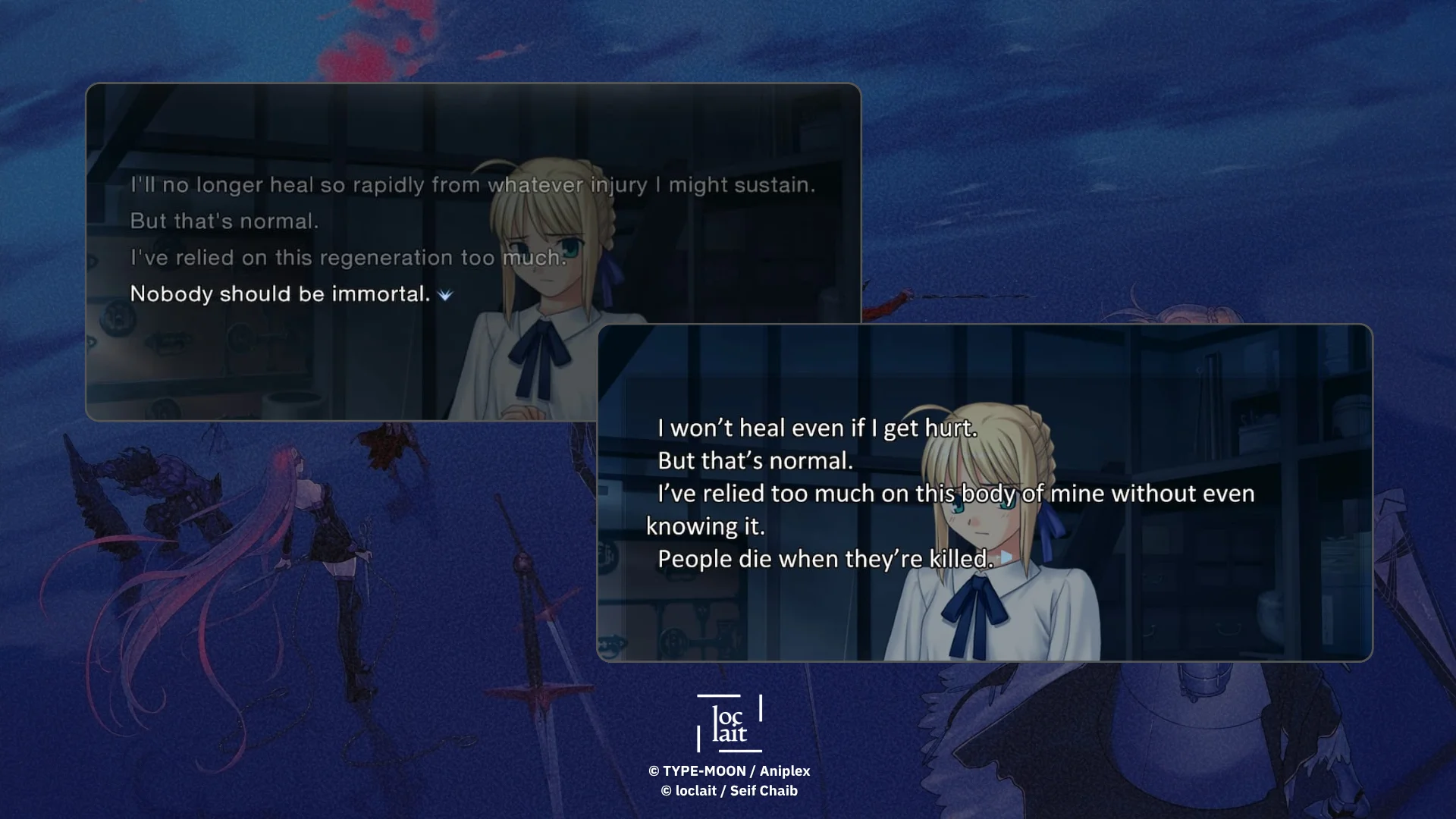
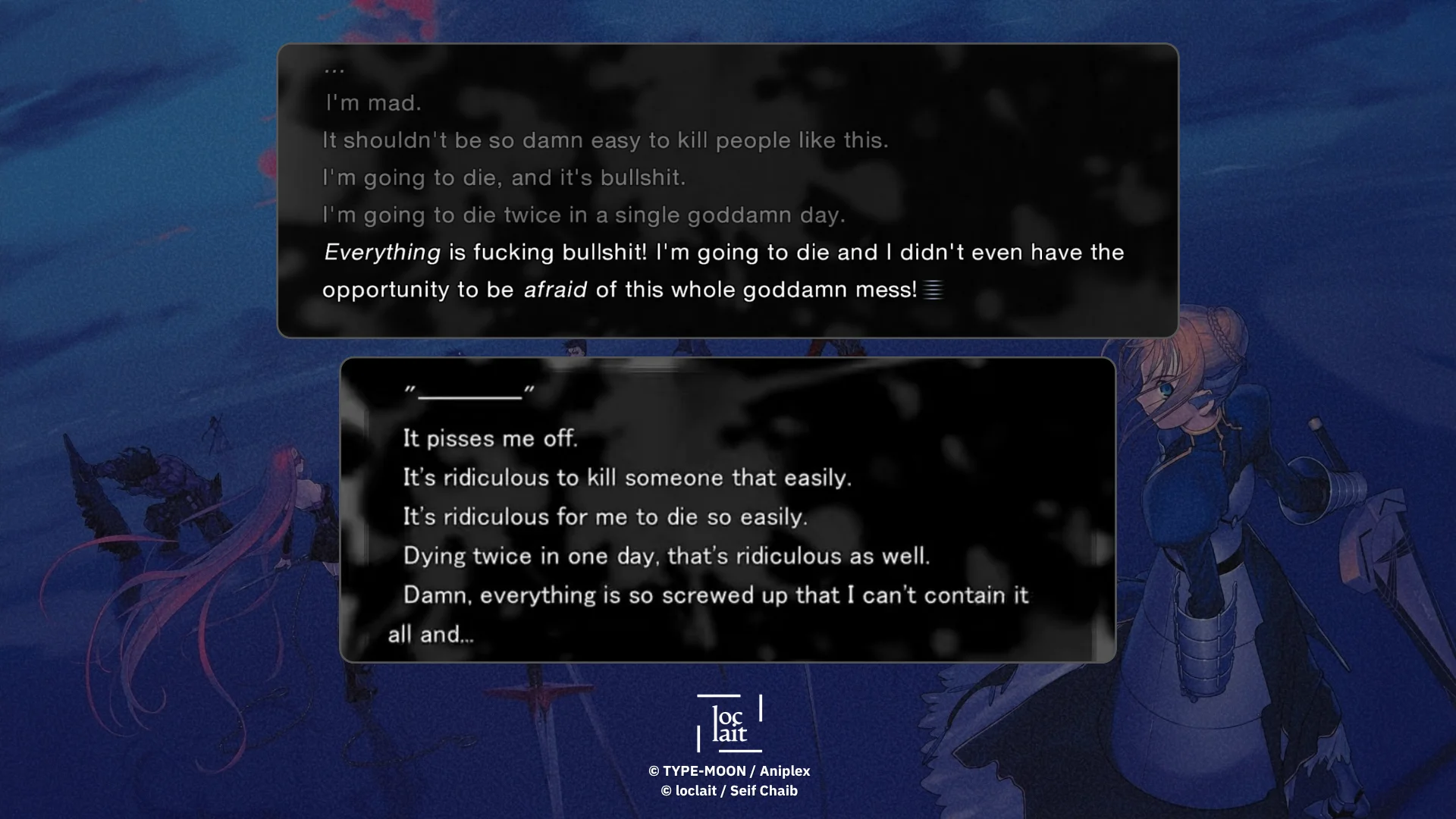
All the international Type-Moon fandom had to go off on were fan translations and official DVD releases—both had no creator input on terminology at the time.
However, that didn’t mean the creators weren’t opinionated on certain terms. Because in Japan, Saber’s name had always been Altria. Japanese artbooks, character materials, and figure boxes frequently featured the Romanized spellings “Altria” or “Alteria”.
So long before Fate/Grand Order’s English localization, Saber already had an official transliteration for her name. It’s just that nobody took it seriously because it wasn’t enforced anywhere in the content consumed by the fandom—fan-translations, official anime subtitles, or forums, communities, and wikis.
It just looked like another case of Engrish that got smoothed over once properly localized into English. Until it didn’t.
The Rationale
Because Japanese doesn’t naturally distinguish between the “R” & “L” sounds, the “Ar” naturally morphs into the language’s most used approximation, “Al”. From there, dropping vowels for more naturalsounding English turns “A-ru-to-ri-a” into “Altria” or “Alteria”.
The creators weren’t all that concerned with etymology. They were transliterating the katakana into whatever sounded cool in English.
To a Japanese author used to (and like many, borderline obsessed with) employing double entendres in their native tongue via homophones, kanji puns, and cultural wordplay, it was perfect.
- ”Altria” sounds like a cool name for an “Alternate” King Arthur for a non-native.
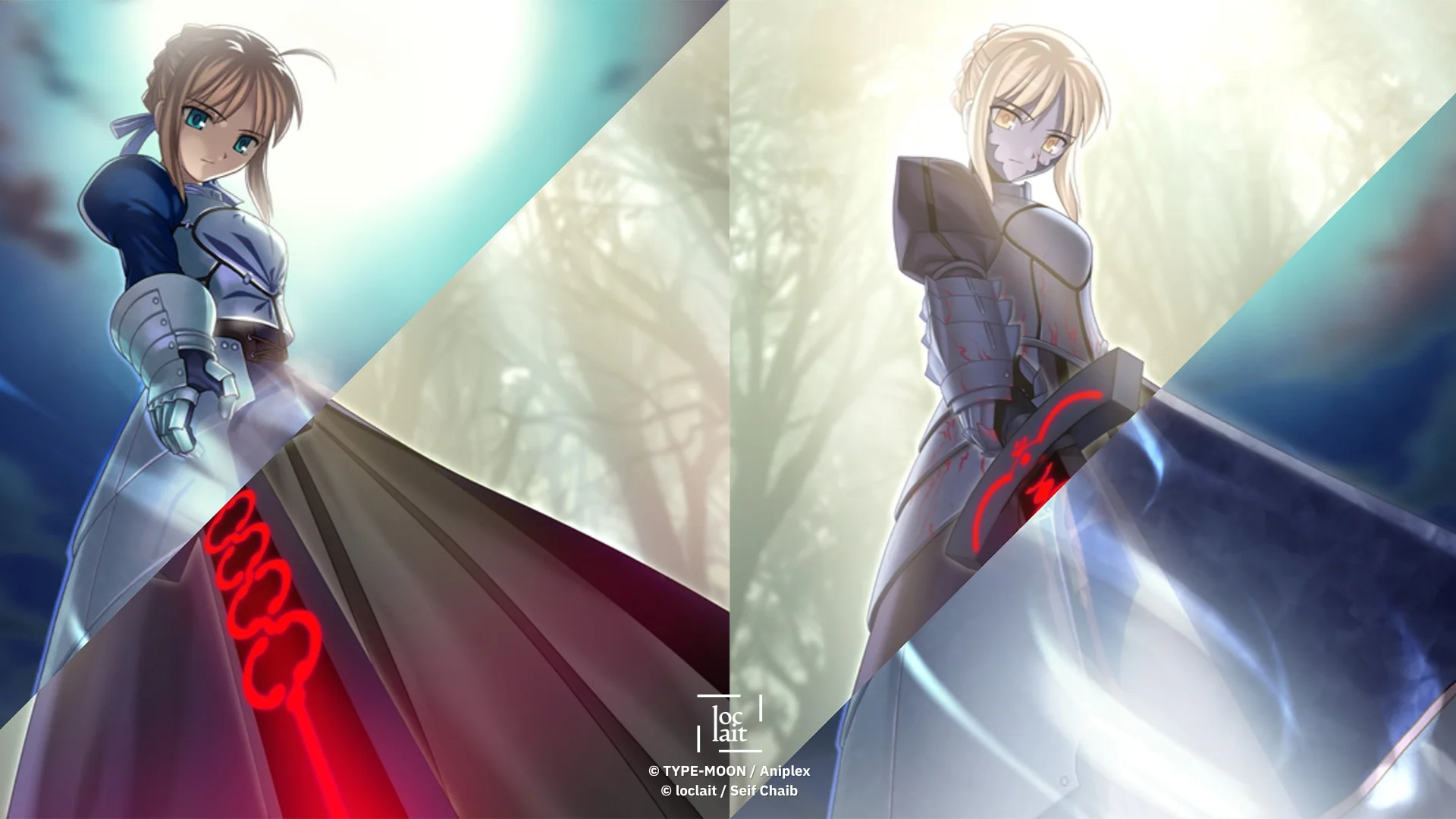
- ”Altria” hints at a later event where Saber gets “Altered” when tainted by the Holy Grail mud.
The Result
According to Aniplex’s Fate/Grand Order AX Panel, the translation team mentioned that they wanted to go with Artoria/Arthuria, but after some back and forth with the rights holders, they had to stick with Altria. Though that didn’t go exactly as planned.
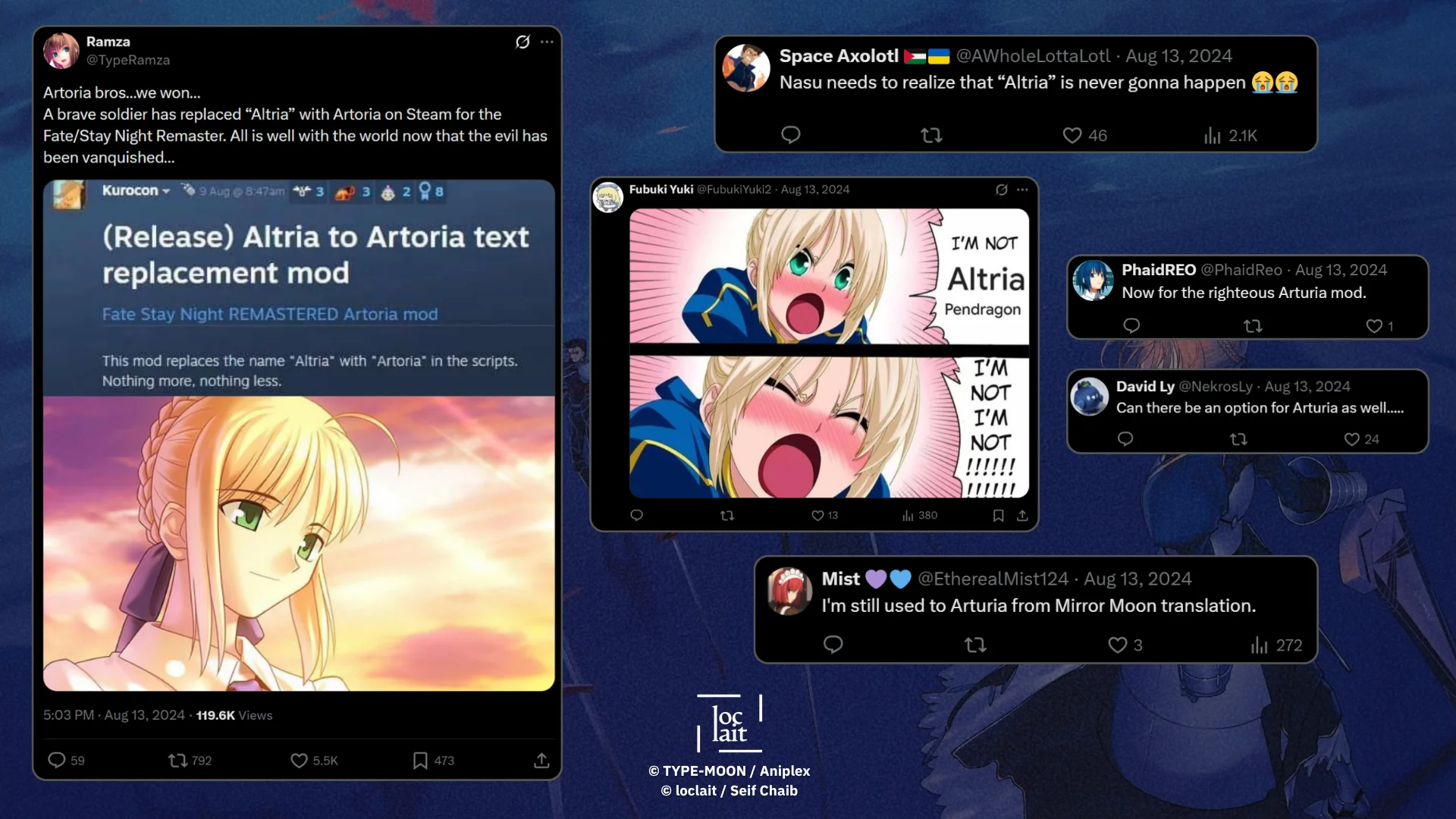
This “correction” never truly took off. It just initiated an awkward stalemate that persists to this day.
Ever since, it’s been Altria in every official release, merchandise, and copy. Meanwhile, the fandom nearly universally ignores the official transliteration, maintaining “Artoria” as the main transliteration across analysis videos, fan wikis, guides, and fandom discourse.
The reasons vary:
- Too little too late—legacy terminology can quickly become sacred.
- Too confusing a name with another Saber class servant (Altera).
- And putting all that aside: “Altria Alter” just sounds dumb.
”Altria” did end up used by the community though, albeit in a rather ironic way.
The transliteration has been relegated to being an alternate spelling on wikis and guides just to boost SEO.
Case #2—Hunter x Hunter by Yoshihiro Togashi
The Context
One of Shueisha’s biggest series to this day, more than twenty years after its first chapter hit Shonen Jump.
Hunter x Hunter technically has four protagonists, but the limelight is on the world they inhabit. In one arc it’s a survivalist exam, in the next it’s a battle royale, in the one after it’s a mafia drama, geopolitical conspiracy, even an election.
While this sounds disjointed on paper, it’s what makes Hunter x Hunter so interesting. Each protagonist lives a drastically different life from the others, and naturally, their unique goals lead them to explore different facets of this sprawling world. That’s what makes every new arc feel like a different story in a completely different genre.
The legendary creator behind the series Yoshihiro Togashi (Also of Level E & Yu Yu Hakusho fame) makes it seamlessly work because he’s one of Manga’s finest world builders. Though, he has a little quirk…
Togashi’s official romanizations for character names are so unpronounceable that the whole fandom—official English localizers included—pretend they don’t exist.
The Hunter Script
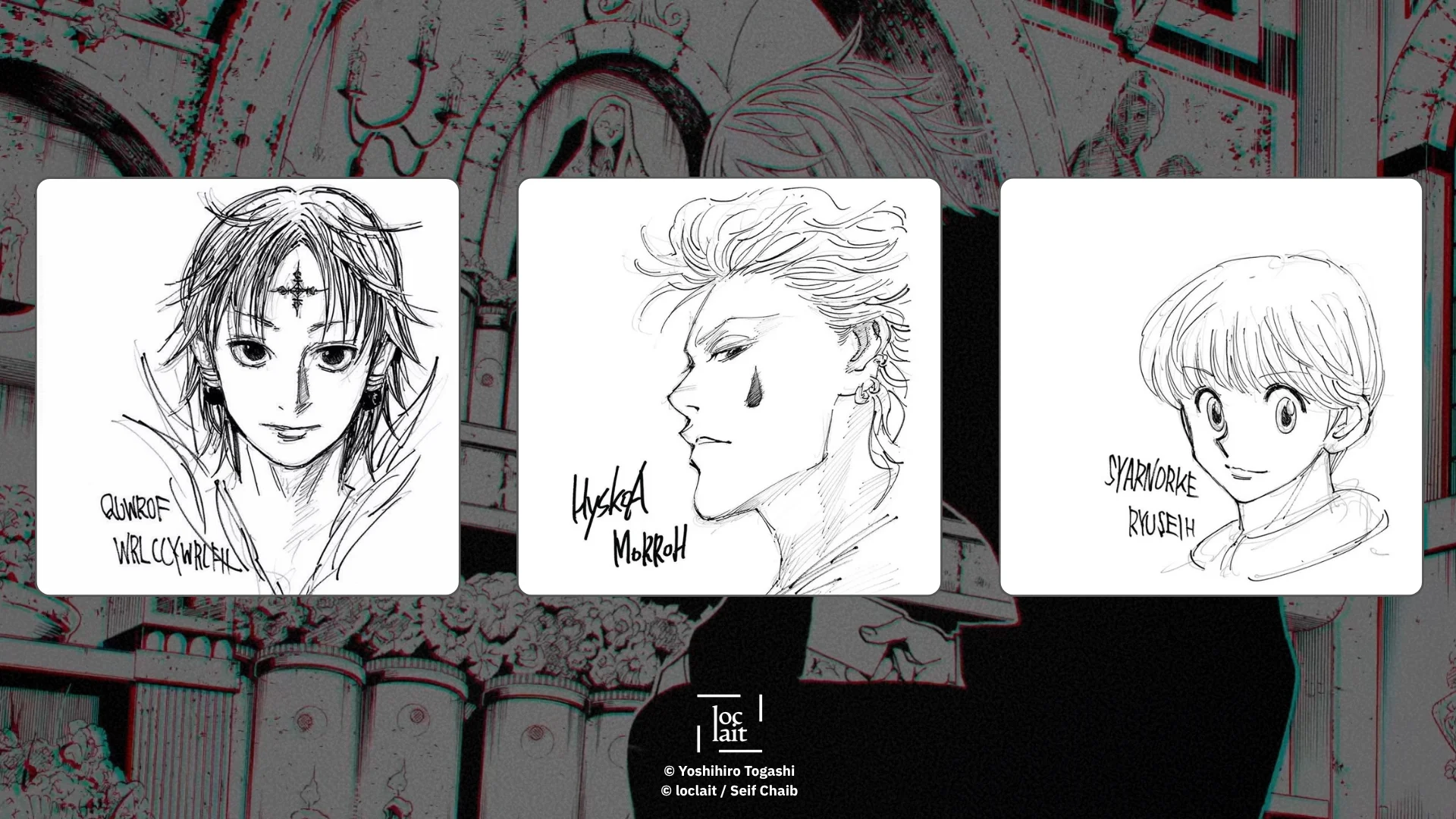
It is incredibly easy to dismiss these as another case of a creator letting the rule of cool prevail—another case of TYPE-MOON—or simply a Japanese creator’s fondness of “Engrish” going unchallenged.
But there’s a method to Togashi’s madness, because his obsessiveness with world building extends to the smallest details.
| Japanese Name | Author’s Official Transliteration | Official English Transliteration |
|---|---|---|
| クロロ=ルシルフル | Quwrof Wrlccywrlfh | Chrollo Lucilfer |
| イルミ=ゾルディック | Yellmi Zaoldyeck | Illumi Zoldyck |
| パクノダ | Phalcnothdk | Pakunoda |
| クラピカ | Curarpikt | Kurapika |
| ヒソカ | Hyskoa | Hisoka |
| シャルナーク=リュウセイ | Syarnorke Ryuseih | Shalnark Ryuusei |
The world of Hunter x Hunter doesn’t use Japanese or English as its main language. Both exist, but canonically, the main writing script scattered throughout the Manga’s backgrounds is represented in a rune-like alphabet that functions as a one-to-one visual substitution cipher for Japanese kana, dubbed “Hunter Script” or “Hunter Alphabet”.
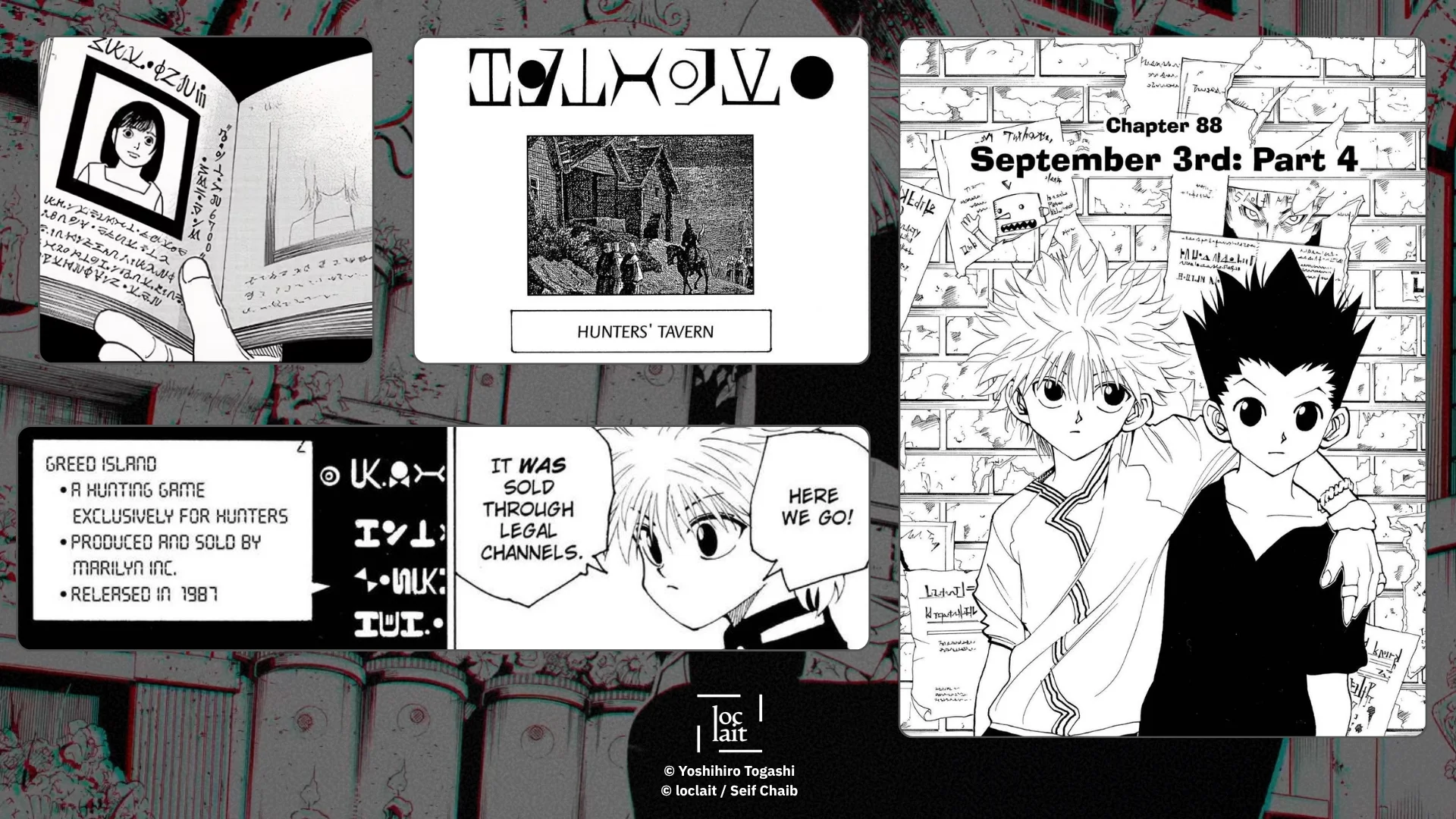
Think Tunic’s “Trunic” cipher, and you wouldn’t be far off.
When Togashi decides to represent character names in Latin script in the manga or its supplementary content (i.e. Artbooks, Databooks, etc…), he leverages that fact to render the names in a foreign yet still familiar manner, reflecting the contrast between modern-day / fantasy elements that coexist in Hunter x Hunter’s world.
The Result
The reception to Togashi’s official spellings has been mixed, though not outright negative.
The official English translation doesn’t use these names at all, likely due to how confusing they’d be to parse in actual dialogue. But when they’re on an author sketch on bonus material, they’re left as is for lore reasons.
The fanbase treats these transliterations like alternate spellings, or a case of the author having some harmless fun with their world.
This is a rare case where a creator’s transliteration adds to a work instead of taking away from it.
Despite Togashi having more singular creative say than any other creative on this list—being the sole copyright holder for his Shueisha published series, something nearly unheard of—he lets his translators do their job while he has his fun. Everybody wins.
Case #3—Final Fantasy VII by Square Enix
The Context
Respectively a genre-defining Role-Playing Game and a term defining spoiler in character form, neither Final Fantasy VII nor Aerith needs an introduction nowadays.
But Aerith wasn’t always called that.
In the original PlayStation 1 release, her Japanese name “エアリス”, pronounced “Earisu”, was initially transliterated into “Aeris”.
Only after an entire generation grew up with that name did Square decide to correct it.
As for the why, welp. It’s an all too familiar story.
Final Fantasy VII’s Rough Localization
It’s no secret that Final Fantasy VII had a rough localization process.
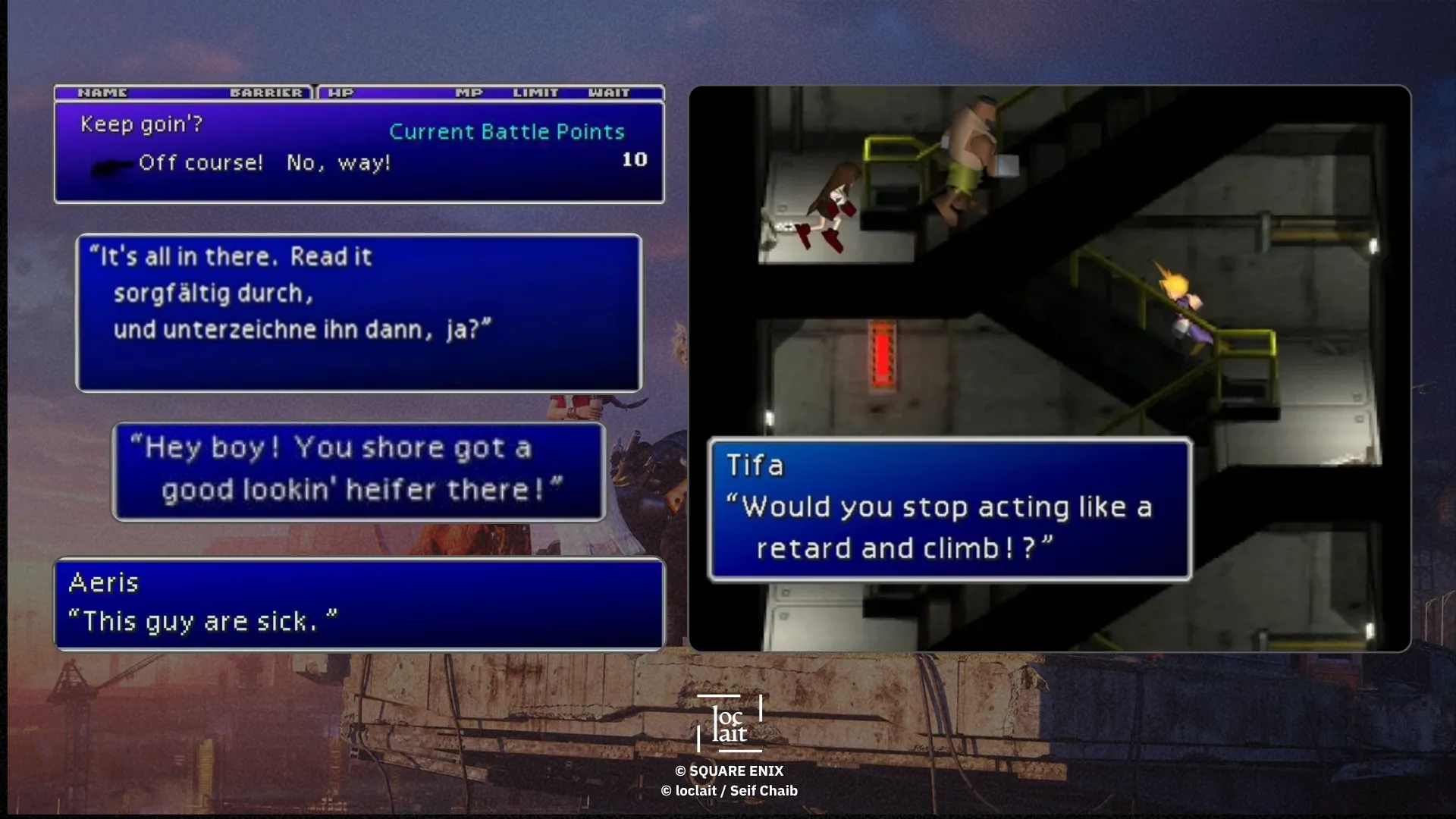
According to multiple interviews with Square’s English-speaking staff from the period, the entire English script was handled almost single-handedly by the company’s only in-house localizer at the time, and the project had no dedicated editor or LQA, little to no communication with the development team, on top of the era’s limited tools to boot.
That heavily flawed English script, in turn, became the basis for all the other localizations pivoted from, under more unfavorable circumstances and even worse deadlines, leading to many of its EU localizations getting a “so bad it’s good” reputation.
As a result, Final Fantasy VII’s original localizations are a time capsule of a (thankfully) bygone localization era, like many early Japanese into English localization efforts.
Aeris vs. Aerith
Aerith’s name was always envisioned to be a pseudo-anagram of “Earth” reflecting her connection to the planet, and the correct transliteration was used as early as some pre-release English media previews.
However, since there was little to no communication during the English localization process, the people who needed the memo the most likely didn’t get it, and that’s probably how we ended up with “Aeris.”
The Result
The early correction of Aerith’s name—starting with her appearance in Kingdom Hearts 1, roughly five years after the English release of Final Fantasy VII—helped cement the intended transliteration in the fandom, but it could never truly overwrite the original.
Despite being the most used transliteration nowadays, and despite being largely accepted by the fandom due to Square’s two decades long course correction effort, a generational divide still exists between players of the original release and newer generations experiencing the story for the first time through the Remake series.
For some, she’s “Aerith”. For others, she is—and always will be—“Aeris”.
It’s Never About Names.
Things don’t just get lost in translation, but also in transliteration.
As outlined in ‘Why Sony Renamed “Knack” in the Arabic Localization’, a more extreme example on what could happen if strict transliteration guidelines are followed blindly, you’re going to hit a wall sooner or later.
The more flexible you are, the more likely you’ll survive the impact.
As these three different cases demonstrate, audiences can have wildly different reactions to “change”. Be it objectively good or bad, it doesn’t really matter.
Change will always be resisted. It’s just a matter of severity.
Which is why it’s of utmost importance to always get localization right from attempt one.
As creators—Japanese creators, more often than not—tend to realize the hard way, the death of the author is a much more accepted concept in the rest of the world.