The House in Fata Morgana Localization Backstage—Part One
— Warning —
This series of articles may contain mild spoilers for the game’s narrative.While we aim to avoid spoilers as much as possible and give heads up when there are any, we strongly recommend circling back and reading this article after finishing the game if you’re sensitive to spoilers.
Welcome to the Localization Backstage!
In an industry buried under tons of NDAs like game dev, info about how your favorite artistic works were adapted into your language is rare. This was our impetus for starting this new series of articles on about our projects: “Localization Backstage”!
Here, wa aim to go into our methodology, highlight the challenges we face, and clarify the rationale behind the decisions we make.
We’re debuting with a collection of articles on our Arabic localization of the visual novel “The House in Fata Morgana”—and we couldn’t have picked a better one, as it’s loclait’s biggest and most complex project to date.
In this introductory article, we’ll explore:
- The story of “The House in Fata Morgana”.
- Details of our translation of the novel’s title. (FIX)
- Our process of localizing the novel’s logo.
Please enjoy the journey with us!
What is “The House in Fata Morgana”?
Introduction
”The House in Fata Morgana” is a visual novel developed by the indie studio NOVECT.
Visual novels are played like books are read, but they differ from traditional novels by virtue of allowing interactivity with story events and influencing endings, featuring artwork, background music, and sometimes even voice acting.
The novel was originally released for the Japanese market in 2012 on PC, followed by multiple ports to other platforms, then was translated into English in 2016.
Since its release, The House in Fata Morgana garnered critical acclaim from critics and players alike in Japan and abroad, and was considered one of the finest the genre had to offer among enthusiasts, despite its modest commercial success at the time.
In 2021, its remastered release earned the title of “highest-rated game of all time” and maintained a 100% rating from critics on Metacritic for several weeks before its rating dropped to 96%. By 2025, its sales exceeded 300,000 copies.
The Plot
You awaken in a decrepit old mansion. A woman with eyes of jade stands before You, informing You that You are the Master of the house, and she Your Maid.
However, You have no memories, no concept of self—or, indeed, any certainty that You are even alive.
The Maid invites You to join her on a journey through the mansion’s lifeless halls, to behold the numerous tragedies that have befallen its residents. She suggests that among them, perhaps You will find some trace of Yourself.
Beyond the first door lies the year 1603. It is an era of unparalleled beauty, where art and theatre flourish. Roses bloom abundantly in the garden where the inseparable Rhodes siblings play, and though they appear to be free of worry and strife… not everyone is content to see them happy.
Beyond the second door lies the year 1707. In this era, the mansion lies in ruins, and a beast dwells within. He claims to yearn for a life of serenity, but it is not long before he yields to his innate savagery and a massacre ensues.
Beyond the third door lies the year 1869. In this technologically advanced era, people are always on the move. The mansion’s master is an ambitious businessman who has invested in the rail industry. However, his obsession with wealth and power leads him to neglect and mistreat his wife.
Beyond the fourth door lies the year 1099. The Maid tells You that this is the final tale. In this era, You see a young man who claims to be cursed and a girl with white hair, called Giselle, who has been branded a witch and marked for death.
How We Adapted The Logo
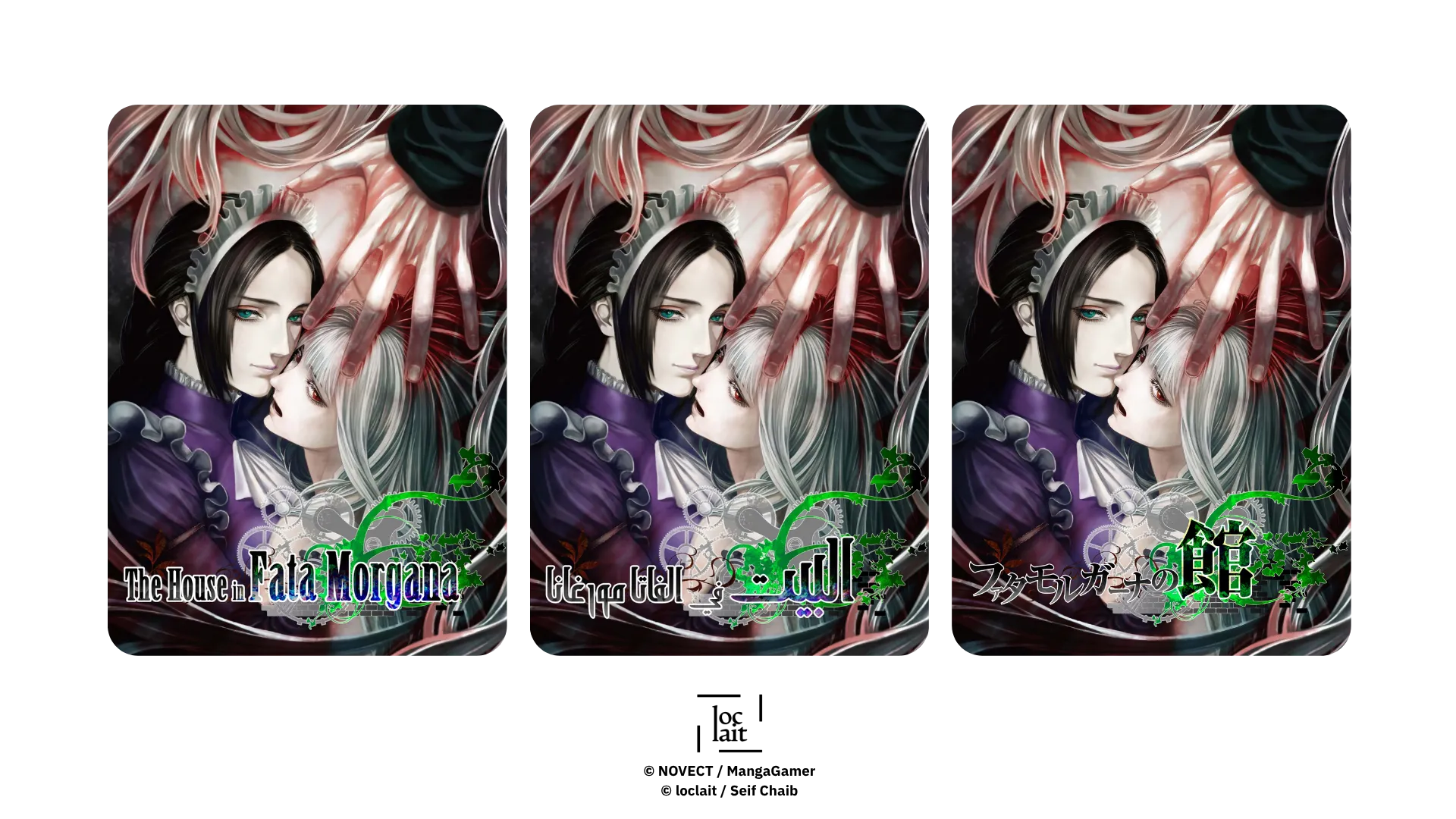
Every iconic novel deserves an equally iconic Arabic logo, and today’s subject deserves nothing less ✨
In The House in Fata Morgana localization project, we wanted from the beginning to provide a comprehensive Arabic adaptation that would suggest the game wasn’t just written in Arabic, but developed in it. Creating an Arabic logo worthy of this story and suitable for its atmosphere was at the top of our task list.
Initial Designs
In our first attempts at localizing the logo, we started where we usually begin: with the original Japanese logo.
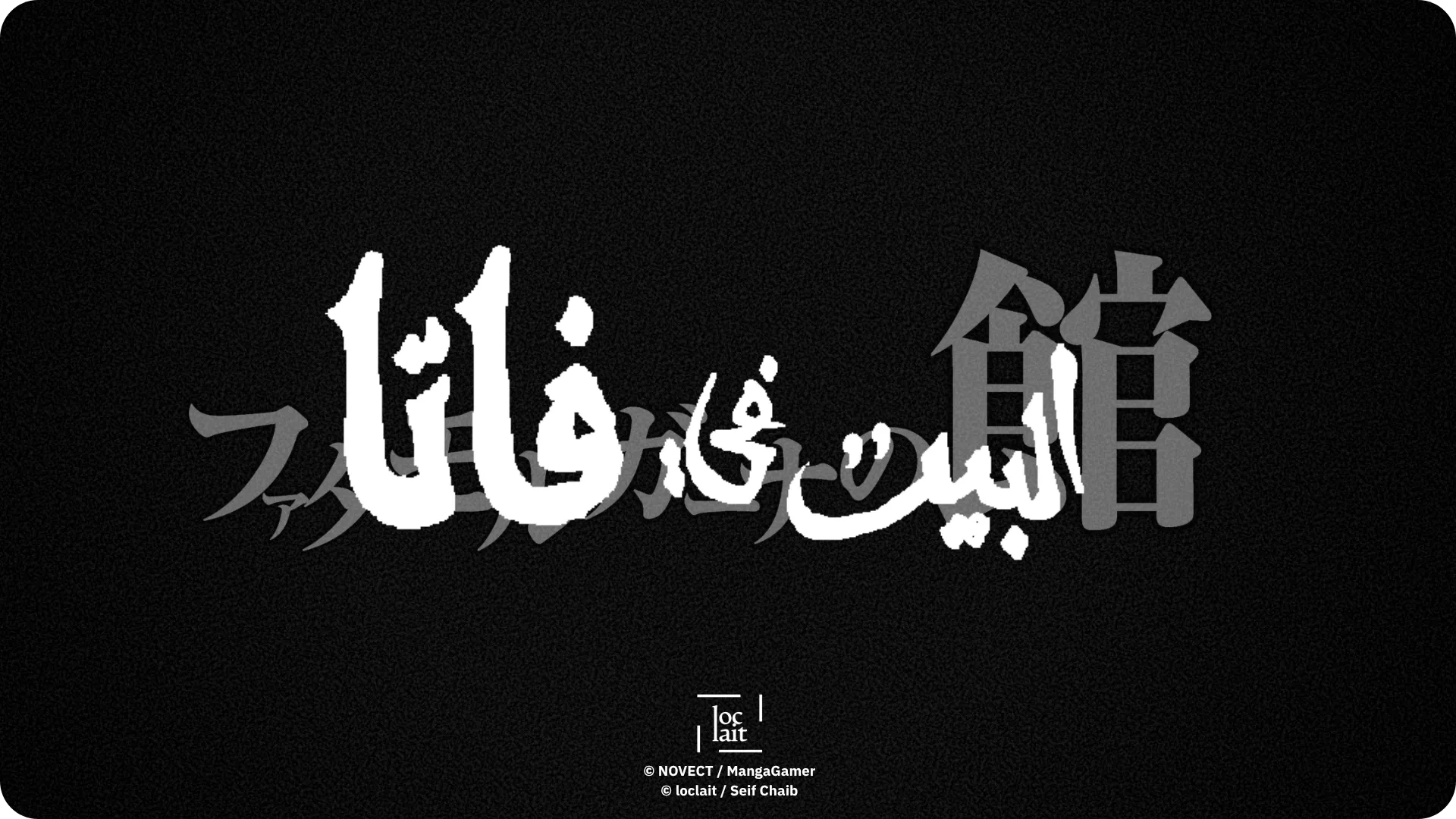
The goal of this sketch was to give the logo a “smoky” and unwelcoming atmosphere to match the story’s mood, rather than directly mimicking it.
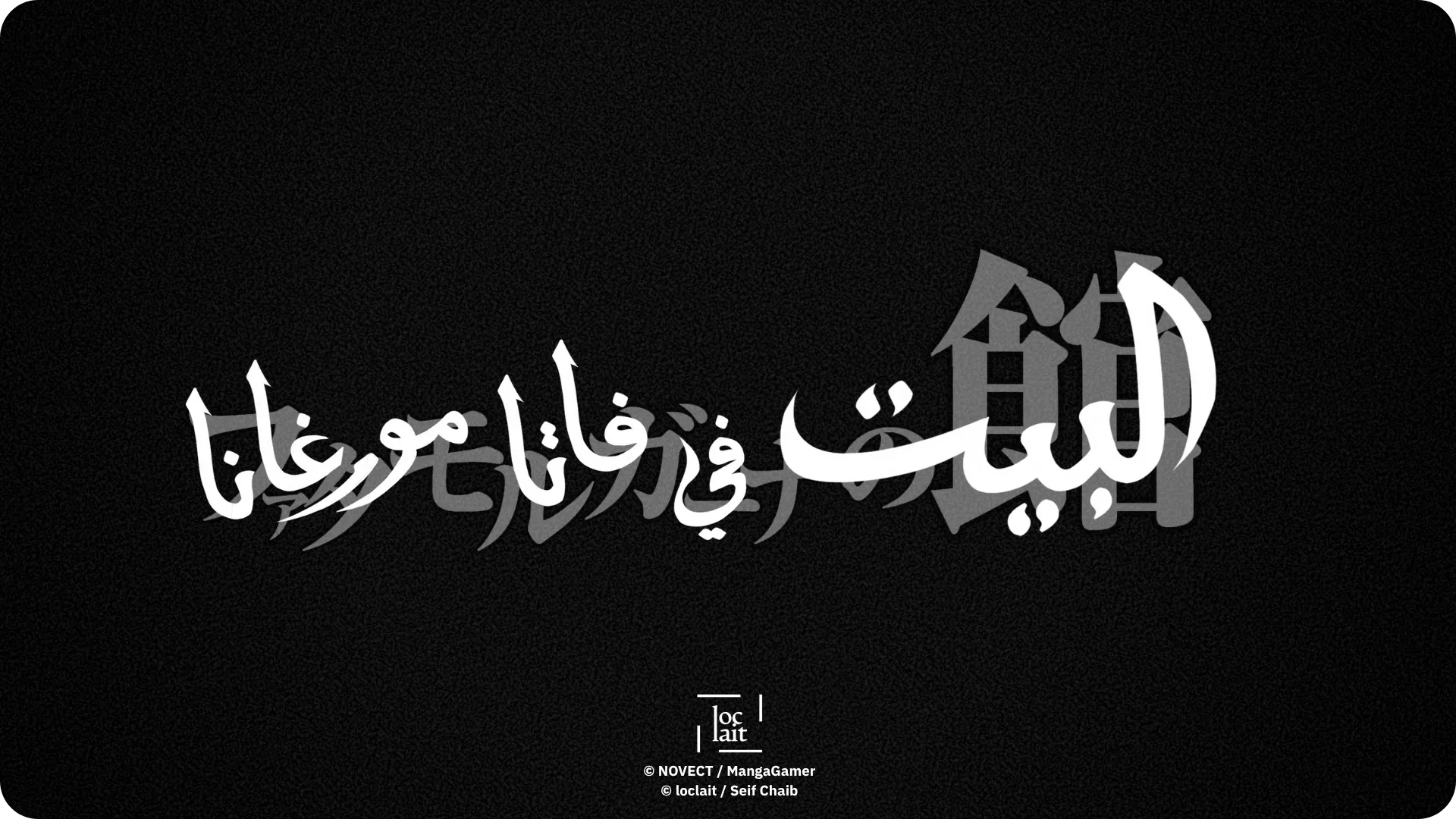
After that, we decided to try more accurately mimicking the Japanese design and examine the results for comparison. Thus, the second attempt was born.
The Final Design
After some discussions, we decided to change course from mimicking the Japanese logo to the English logo in our Arabic version.
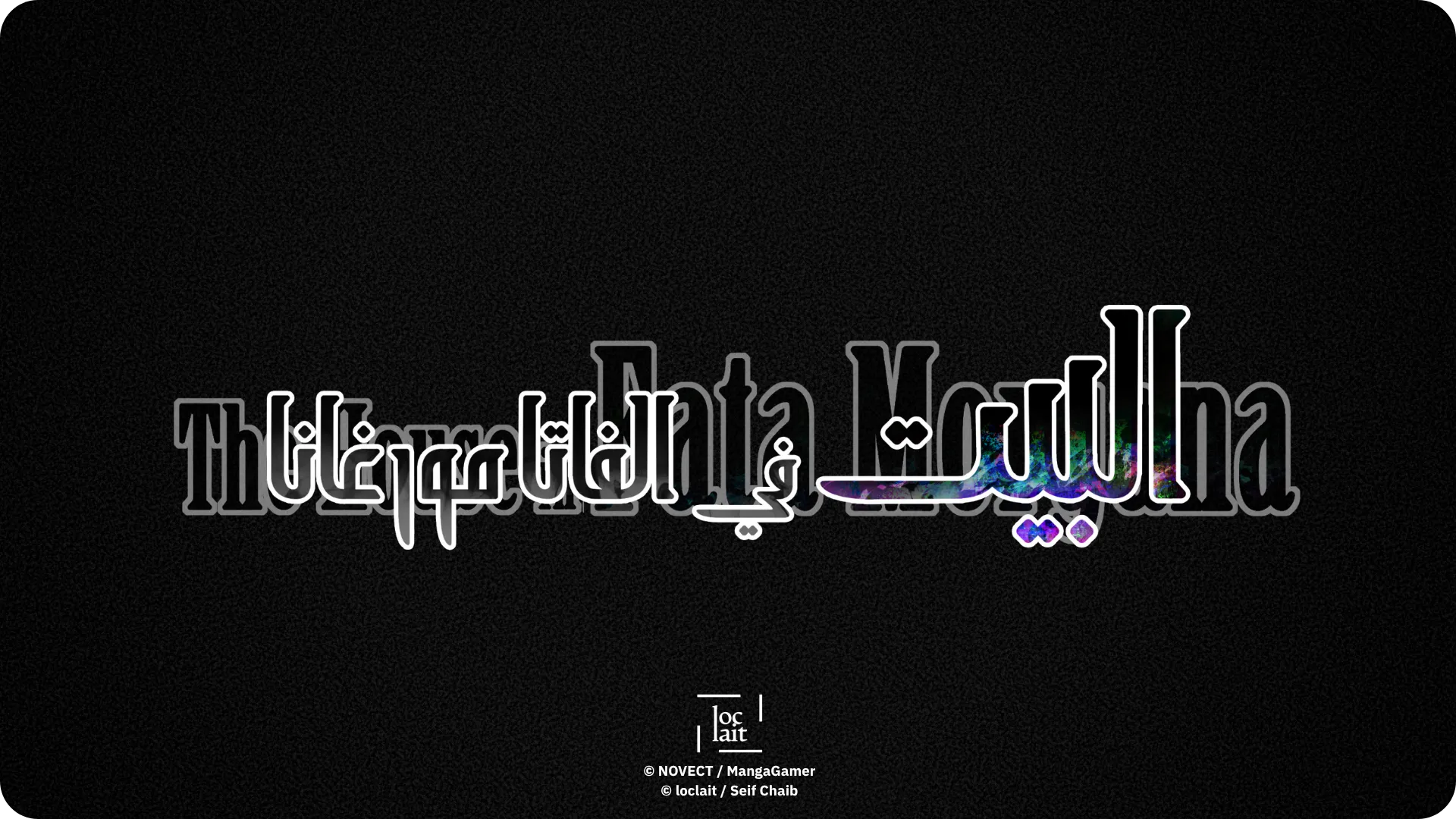
We made this decision because the English logo was—in our view—closer to the novel’s Gothic atmosphere than the elegantly designed Japanese logo with its smooth edges, which might not convey the intended impression to Arabic audiences when directly mimicked.
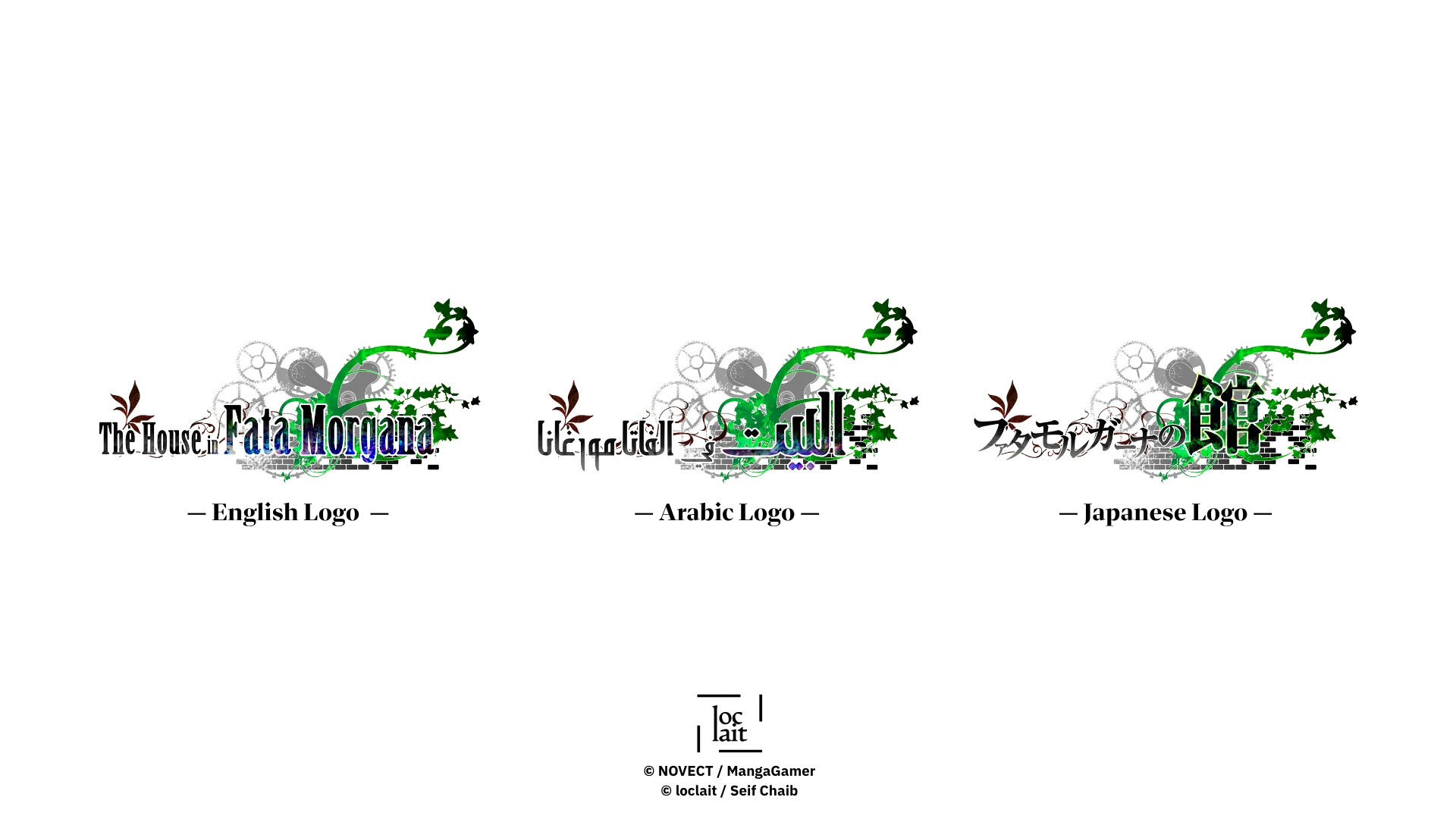
Nevertheless, our final Arabic logo drew inspiration from both the Japanese and English logos.
- In the first attempt, we mimicked the Japanese logo and focused on “Fata Morgana” following the English logo.
- In the second attempt, we mimicked the Japanese logo and focused on “The House” / “館” following the Japanese logo.
- In the final design, we mimicked the English logo and focused on “The House” / “館” following the Japanese logo.
We preferred the Japanese logo’s focus on the word “House” due to its centrality to the story compared to the English logo’s focus on the “Fata Morgana” phenomenon, so we combined what we liked most from both logos (design/focus) and made the word “House” the center of the final Arabic logo.
The Design Process
This project’s logos were localized under the supervision of our partners at Eternal Dream Arabization, by designer Malik Al-Ruwaili.
Below, Malik guides us through the logo localization process and the challenges he faced during the project.
Malik Al-Ruwaili
(Arabic Logo Designer)
The initial logo was hand-drawn/written, while the final logo is made from shapes because it’s more geometric.
I saved several shapes from the English logo to use and modify while creating the Arabic logo, including the serif (triangle) and line endings (used in the “ت”, waw, and ra).
I used folders extensively, with each word in its own folder. When I finished, I copied the folder and merged it into a single layer, then applied all the effects to it, and also adjusted the sizes somewhat.
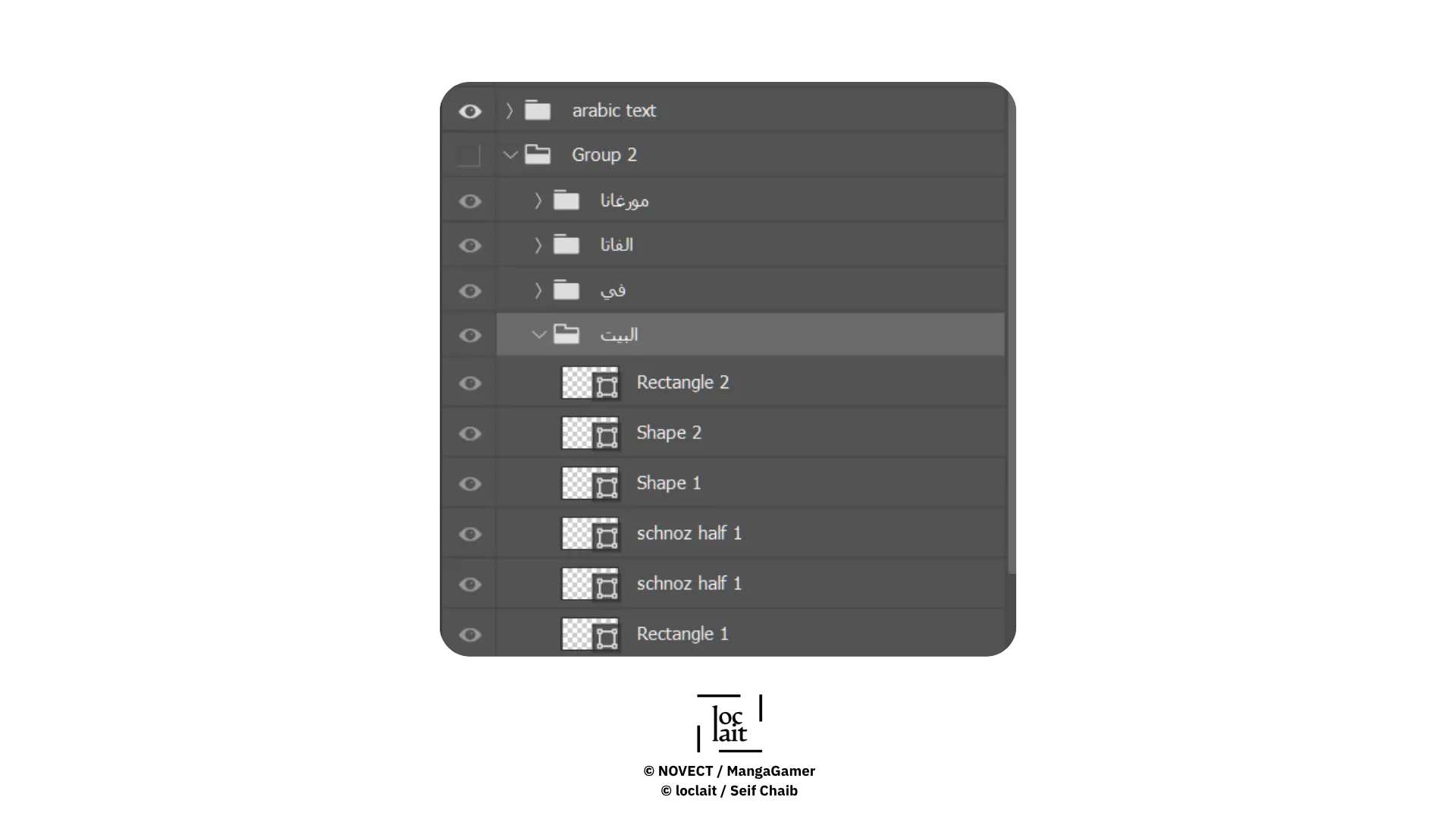
For the word “البيت” (The House), the PSD we received had all the color effects merged, so I had to recreate them myself.
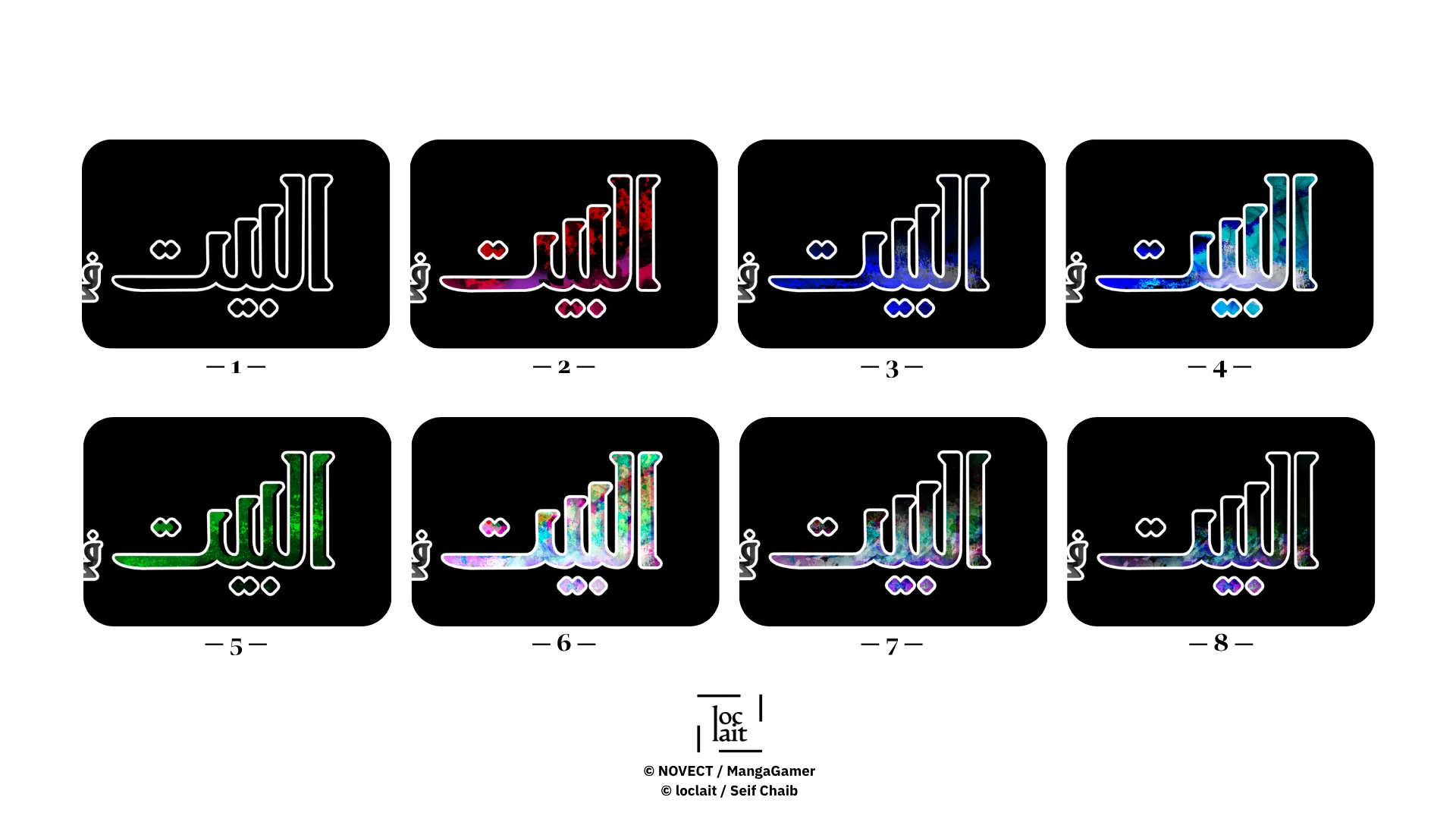
I started with (1), then switched to a drawing tablet and painted it color by color, starting with red (2), then blue (3 and 4), then green—which they moved slightly to the left so I did the same—(5), combined them together (6), then added shadows (7), and some spots (8).
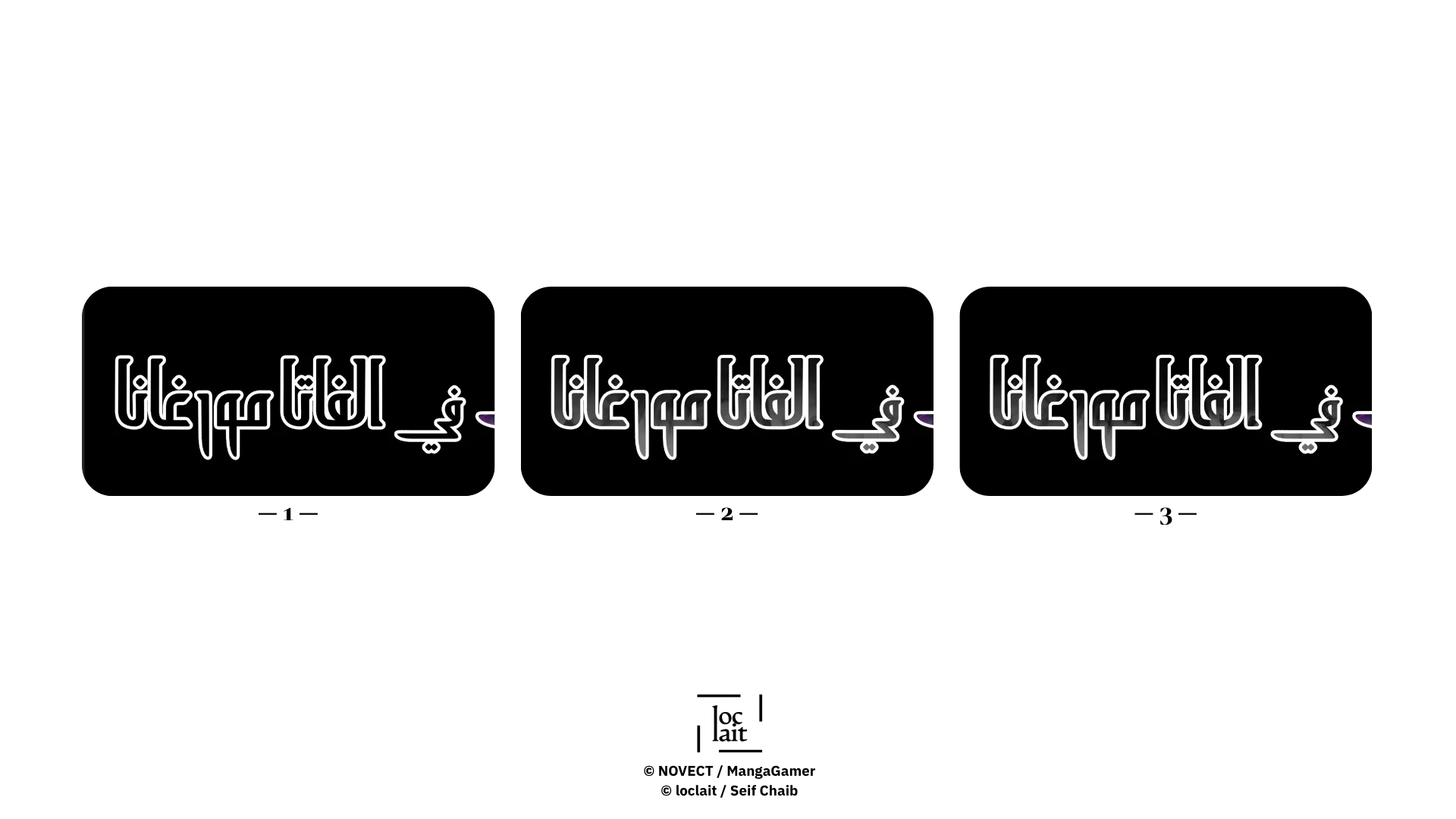
The “في الفاتا مورغانا” (in Fata Morgana) part was simpler. I started with (1), then drew smoke effects inside it (2), then added shadows and some contrast and erased parts of it (3).
Translating The Title
”Why did you translate the title this way?” is probably the most frequent question we’ve received about the project after “When will the translation be released?”
Unlike our question about the release date, this question is one we love answering when asked—because every suggestion made by story lovers for the title had already crossed our minds, and was only rejected after long discussions and for good reasons.
But before all this, you might be wondering why the novel’s title has this degree of controversy. Doesn’t its translation seem simple?
Appearances can be deceiving, and the expression “don’t judge a book by its cover” applies literally here 🫠
The Meaning of the Story’s Title
| Arabic Title | English Title | Japanese Title |
|---|---|---|
| البيت في الفاتا مورغانا | The House in Fata Morgana | ファタモルガーナの館 |
The Japanese title of the novel “ファタモルガーナの館”, which romanizes to “Fata Morgana no Yakata,” has two hidden obstacles:
- An important term used frequently that must be localized rather than translated literally.
- Intentional wordplay that leads to two different meanings depending on interpretation.
The Important Term
The important term we mentioned is “館”, which romanizes to “yakata.”
I’ll let you in on a little secret—we lied to you. The literal translation of this term is “mansion” not “house,” but translating it literally in this context wouldn’t be correct, which is why it was replaced with “house” in the English localization and “mansion” was rarely used as its translation.
The reason is that this term is saturated with certain cultural expectations, and those cultural expectations differ between Japan and the rest of the world.
Japanese homes are smaller than Western homes on average, and the latter serve as the standard for most cultures in determining the difference between house, villa, and mansion. Therefore, what is considered a “mansion” from a Japanese perspective won’t always match other cultures’ expectations of the word.
This term is primarily used in Japan today for large traditional Japanese houses, large Western-style houses, and actual mansions. But its usage is somewhat general and may include medium-sized Western-style villas.
In the Arabic localization of The House in Fata Morgana, we decided to use “بيت” (house) as the primary translation of the term and “قصر” (mansion/palace) as a secondary translation, making the extent of using the terms compared to each other in the text depend on the character’s background.
- Characters who primarily use “بيت” (house) will be well-off characters accustomed to luxury.
- Characters who primarily use “قصر” (mansion/palace) will be common folk or the destitute.
- A character may use both terms, but one will always predominate over the other.
With this single choice, we conveyed the different meanings of the term and used the opportunity to add another dimension to character writing 🫡
The Wordplay
The Japanese title of the novel has two meanings due to wordplay, and both are intentional and correct.
Primary Meaning: “The House in the Fata Morgana Mirage”
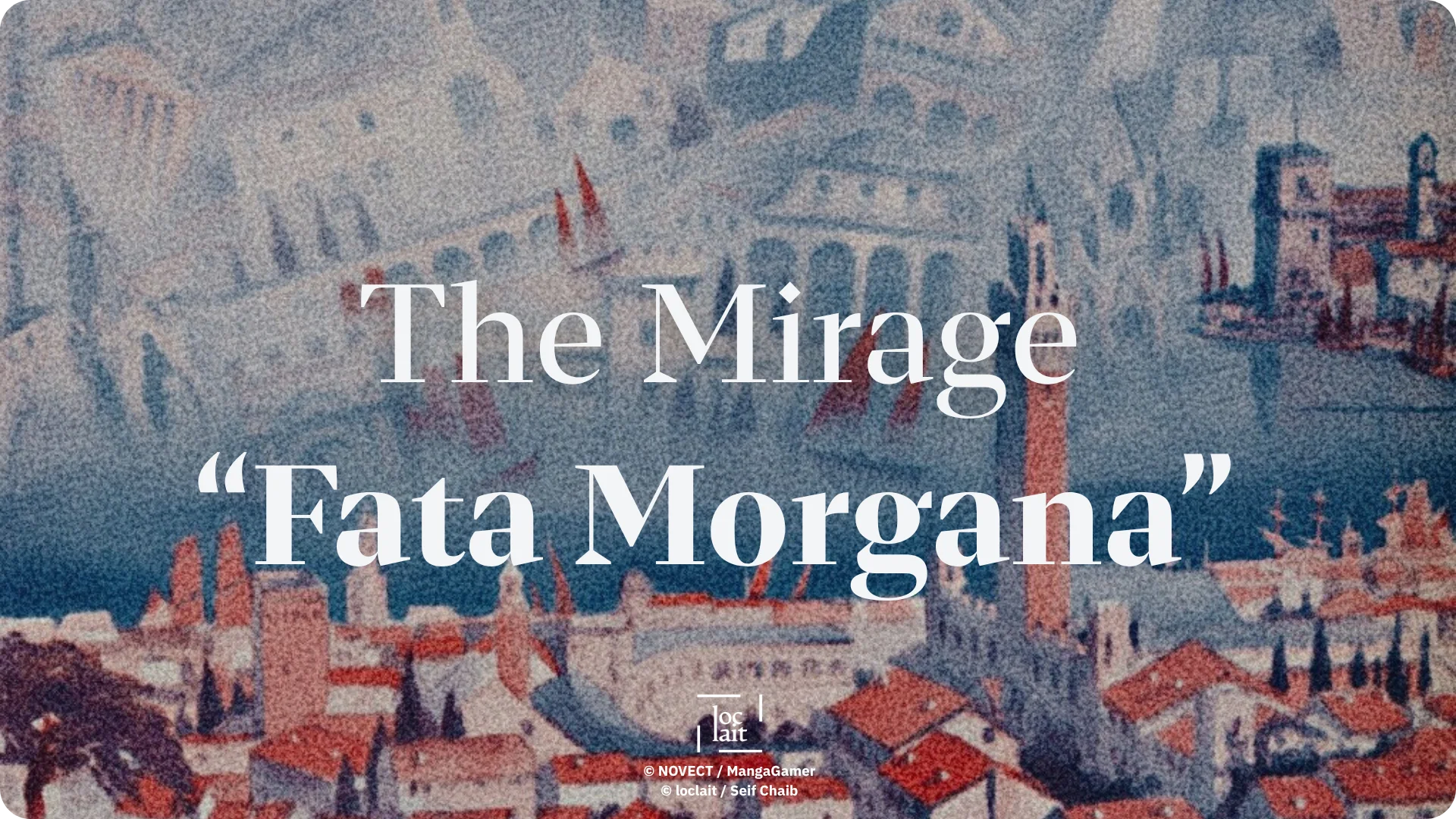
From the painting “The Strange Fata Morgana Seen in Sicily” by an unknown artist.
This is the primary meaning of the title. The intent is that this dwelling exists in a perpetual state of “Fata Morgana,” and the term “Fata Morgana” refers to a type of optical mirage.
A “Fata Morgana” mirage forms near the horizon above water surfaces, distorting the image transmitted to the eye due to light refraction through air layers of different temperatures.
The phenomenon causes distant images to be distorted. Some may appear larger, in the wrong position, or as if floating in the air.
The game’s introduction highlights the relationship between the house and this mirage in its description: “The features of that ancient mansion appeared before you just as the world gradually appears after sleep,” and the story emphasizes this dwelling’s ethereal appearance from the characters’ perspective whenever the opportunity arises.
Secondary Meaning: “The House of the Witch Fata Morgana”
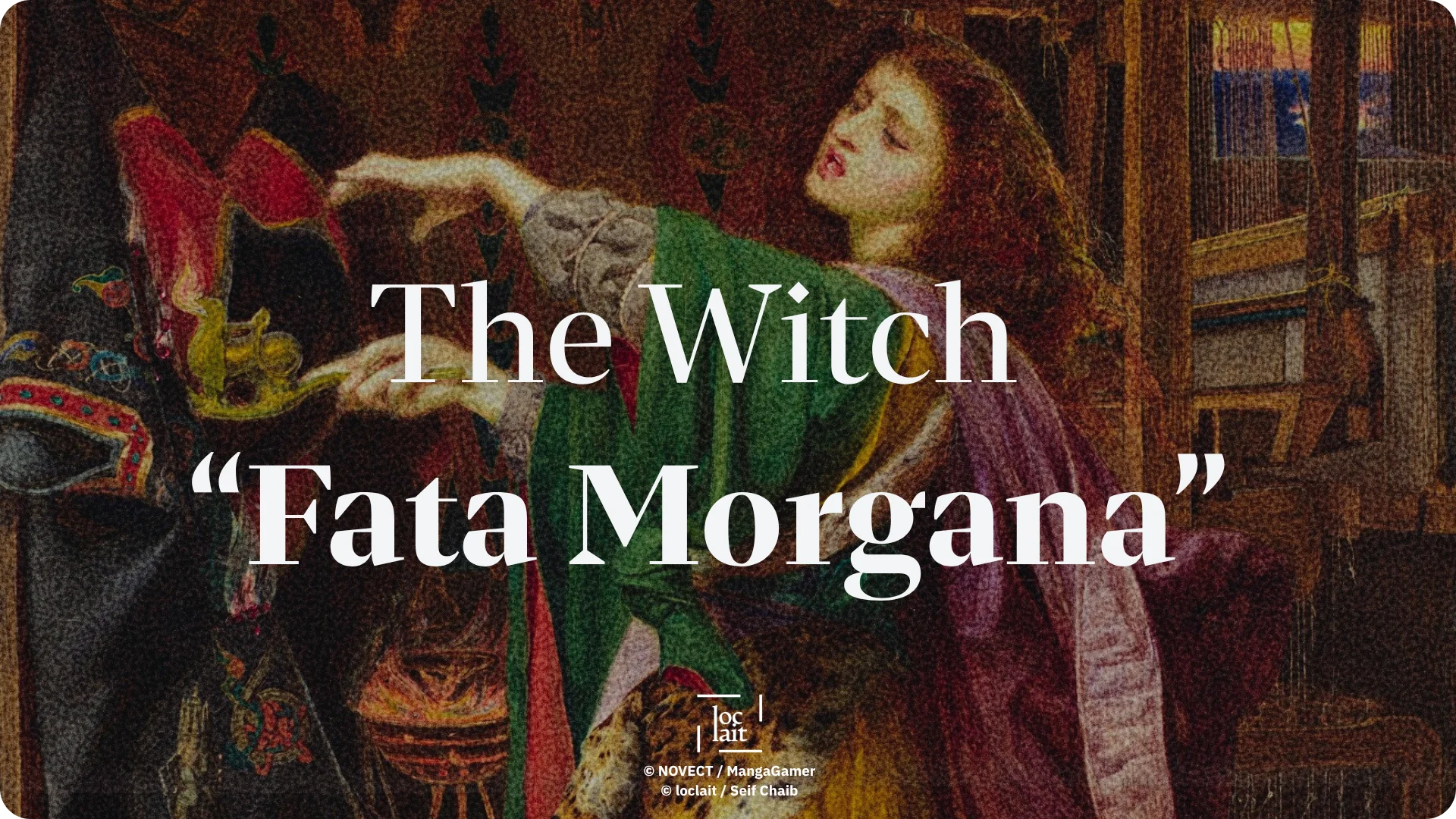
From the painting “Morgan le Fay” by artist Frederick Sandys.
This is the secondary meaning of the title, and the meaning that players aren’t supposed to understand until later.
The term “Fata Morgana” is Italian, but its origin traces back to English. It’s the Italian translation of “Morgan le Fay,” meaning “Morgan the Fairy,” King Arthur’s half-sister and priestess of Avalon from Arthurian legend.
The “Fata Morgana” mirage was named after Morgan le Fay for her skill in shape-shifting through magic and flying, and also because the mirage appears above water surfaces—while Avalon where Morgan resides is an island surrounded by sea.
This specific mirage was used intentionally in the title for its dual meaning. The name of the witch who allegedly cursed the house’s inhabitants is also “Morgana” in the novel’s story.
If you’ve followed “Attack on Titan,” the wordplay is similar to that series’ title wordplay.
The Japanese title of the series “進撃の巨人” which romanizes to “Shingeki no Kyojin” has a dual meaning. Its meaning could be interpreted as “Advance of the Titans” or “The Attacking Titan,” and both are correct and don’t contradict the story’s context.
But the English localization of the series chose to use a more attractive and clear title by decision of the story’s author, localizing the title to “Attack on Titan,” and other languages followed the official English translation.
Why We Chose Our Title
Not all languages have structures like Japanese naturally, so transferring its wordplay can sometimes be impossible.
The English Fata Morgana translation chose to focus on the primary meaning of the title and completely discard the secondary meaning, for example, because any translation that might preserve both meanings—if possible at all—would be far too long and/or confusing.
Because this is an important choice affecting players’ experience, we consulted the novel’s writer, Mr. Keika Hanada, regarding our Arabic translation’s title.
We shared with him the proposed titles with their pros and cons from our perspective and the reason for suggesting each one, leaving him the final decision.
Among the rejected titles were the following 👇
| Proposed Title | Reason for Suggestion | Reason for Rejection |
|---|---|---|
| البيت في فاتا مورغانا | This is a literal translation of the title used in the English localization “The House in Fata Morgana.” | This translation suggests that “Fata Morgana” is a geographical region for those who don’t know it’s a type of mirage, which explicitly contradicts the story. |
| بيت فاتا مورغانا | This primarily means “the house of the witch Fata Morgana,” with less focus on it being a house in a mirage. | This translation focuses too much on the secondary meaning, i.e., “the witch’s house” instead of the meaning the story is based on, i.e., “the house in the mirage.” |
He answered—thankfully—with a comprehensive response that dispelled our doubts, and recommended from among our suggestions our preferred choice: “البيت في الفاتا مورغانا” (The House in THE Fata Morgana).
Our translation of the title aimed to preserve the primary meaning at the expense of the secondary meaning as the English translation did while clarifying any ambiguity, because understanding that meaning is necessary for understanding the story, and because it’s the most important meaning in the writer’s opinion.
The difference between it and one of the rejected translations is very simple, but very important: “the definite article الـ.”
Adding “the definite article الـ” to “Fata Morgana” dispels most doubts about the term being a proper noun referring to a geographical region, even if the player doesn’t know the meaning of the term and the optical phenomenon it refers to.
This translation is also more accurate in meaning, which is “the house in THE mirage” not “the house in A mirage,” and closer to natural Arabic linguistic instinct.
If you’re wondering why we didn’t choose your favorite translation of the title, we hope it’s clear now 😛
Thanks for reading! We hope you enjoyed it, and we’ll see you in the next article in the series 👋